
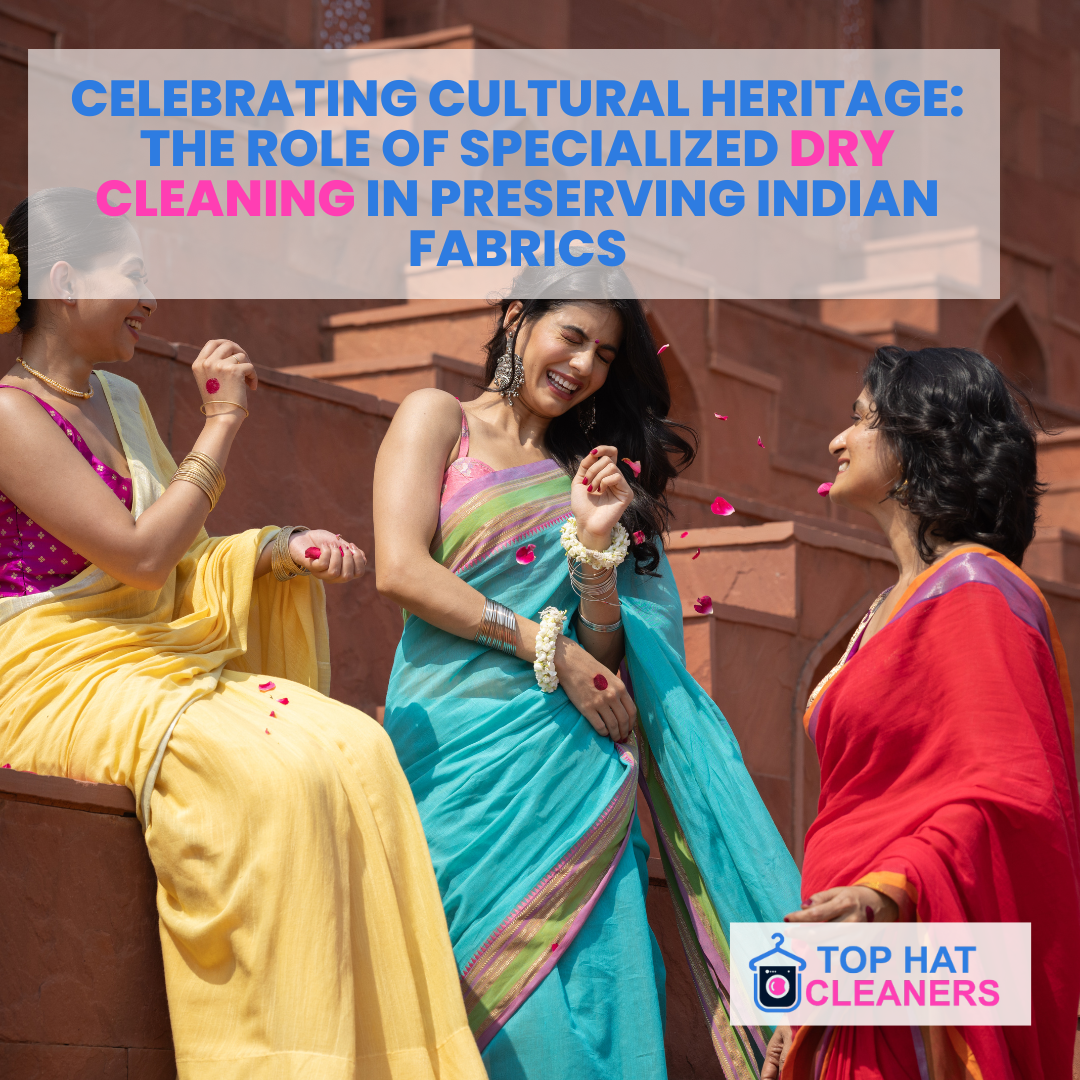
Indian fabrics truly reflect the country’s rich heritage and diverse culture. They narrate centuries-old stories through intricate patterns and bright colors that express local traditions and customs. But preserving these precious textiles requires special attention. That’s where specialized dry cleaning services play a vital role.
At Top Hat Cleaners, we deeply value preserving the beauty of Indian traditional attire. We proudly offer expert Indian Traditional Clothes Dry Cleaning Services to ensure these clothes stay as beautiful as the day they were sewn.
The Importance of Indian Fabrics:
A Tapestry of Heritage
Indian textiles—from silk and cotton to wool and linen—combine history and artisanship. Each region features unique weaving styles, techniques, and designs. For example, Banarasi silk stands out for its opulence, while Khadi symbolizes India’s freedom struggle. People use these textiles extensively in traditional attire such as sarees, lehengas, and sherwanis, making them an essential part of Indian culture.
Modern Problems with Fabric Care:
Although Indian clothes look lovely and hold great value, you must care for them carefully due to their delicate nature and intricate craftsmanship. Harsh chemicals or improper handling can cause irreversible damage. Professional dry cleaning experts step in here. They use their knowledge and equipment to handle these garments gently, preserving their beauty and extending their life.
Why Specialized Dry Cleaning is Important?
Specialization in Fabric Handling:
Avoid putting traditional Indian wear into a regular washing machine. These clothes often feature embroidery, sequins, or zari work that standard washing methods easily damage. Our skilled dry cleaning team uses specialized equipment and mild solvents that remove stains while protecting every fiber.
Stain Removal and Fabric Restoration:
Removing stains requires specific skills to protect Indian fabrics. Our dry cleaners know exactly which chemicals to apply on different stains without fading colors or altering textures. From removing curry stains on beautiful sarees to tackling red wine marks on wedding lehengas, Top Hat Cleaners uses advanced technology and solutions to restore your fabric’s original glory.
Complementary Alteration & Tailoring Laundry Services in Dallas:
Besides Indian Traditional Clothes Dry Cleaning Services, we provide Alteration & Tailoring Laundry Services in Dallas. Indian attire often features complex designs that require professional tailoring to fit perfectly. Our tailors specialize in handling various fabrics so your outfit looks flawless, whether it’s a wedding gown or festive attire.
Tailoring for Authenticity:
When you need alterations, our alteration services deliver. Our expert tailors carefully maintain the garment’s original look while ensuring a comfortable fit. Whether shortening a saree or resizing a sherwani, we handle every task with precision so your outfit not only looks lovely but fits your specifications perfectly.
Economical Laundry Service in Dallas
At Top Hat Cleaners, we work hard to bring quality fabric care within everyone’s reach. That’s why we offer affordable laundry services in Dallas without sacrificing quality. We believe everyone should preserve their cultural heritage without breaking the bank. Our pricing suits different budgets while providing the quality cleaning your precious fabrics deserve.
A Commitment to Excellence
As leaders in the laundry industry, we pride ourselves on excellence. Our highly trained staff dedicates themselves to using the best methods and materials. Before cleaning, they carefully inspect each item to identify special care needs, enabling us to customize our services to meet your Indian fabrics’ unique requirements.
Conclusion: Celebrate and Preserve Your Heritage with Top Hat Cleaners
At Top Hat Cleaners, we take responsibility for maintaining the beauty and integrity of your Indian apparel. Our professional dry cleaning techniques keep your heritage clothes shining for many years. Whether you have a grand lehenga for a celebration or a stunning saree for a family event, we protect your cultural legacy.
When you choose Top Hat Cleaners, you invest in your culture’s legacy. We help you celebrate your heritage with meticulous fabric care. Call us now to order Indian Traditional Clothes Dry Cleaning Services or Alteration & Tailoring Laundry Services in Dallas, and enjoy the best affordable laundry service in Dallas.
Frequently Asked Questions
How frequently should I dry clean my Indian traditional clothing?
You should dry clean sensitive materials after two or three uses, especially if you wear them around oils, perfumes, or smoke. The exact frequency depends on how often you wear the clothes and your activities while wearing them.
Can I clean my Indian clothes at home?
You can hand-wash some fabrics lightly in cold water. However, most delicate Indian fabrics require professional care because trained experts understand their nuances. To protect embellishments and preserve the fabric, we recommend Indian Traditional Clothes Dry Cleaning Services for most garments.
The Deep Roots of Indian Textiles
Indian fabrics are woven into the very identity of the nation. Centuries before industrial textile production existed, Indian artisans were masters of handloom weaving, dyeing, printing, and embroidery. Indian textiles were traded across continents and treasured in royal courts worldwide. Each region developed distinct styles — from the silk brocades of Banaras to the cotton ikats of Gujarat and the embroidered wonders of Lucknow.
These fabrics embody not just fashion but history, tradition, and cultural expression. With such profound significance, preserving Indian textiles is about honoring heritage and extending the life of intricate craftsmanship that connects generations.
How Traditional Techniques Inform Modern Care
The techniques used to create traditional Indian fabrics vary widely, and understanding these differences helps inform how garments should be cleaned and preserved. For example, silk saris dyed with natural colors retain their luster over decades when treated gently. Hand-embroidered fabrics — such as those adorned with mirror work, sequins, or zari threads — require careful handling to ensure the decoration remains intact.
Modern professional dry cleaning bridges traditional craftsmanship with contemporary garment care. It respects the original artistry by using approaches that align with fabric needs, rather than generic treatments that may cause harm.
The Role of Regional Identity in Fabric Design
Every region of India contributes a unique textile narrative. Kanjeevaram silks from the South are known for their rich colors and gold-threaded designs. In the West, Bandhani tie-dye reflects playful patterns and symbolic motifs. The East boasts intricate Kantha embroidery, created by layering and stitching delicate patterns.
Preserving these garments goes beyond cleaning. It involves honoring the artistic choices that represent cultural identity. Professional garment care services recognize these nuances and treat each piece with the respect it deserves.
How Cultural Celebrations Elevate Traditional Attire
Traditional Indian garments are often worn during major festivals and life-cycle events such as weddings, births, religious ceremonies, and festivals like Diwali and Holi. These occasions are replete with emotion, symbolism, and memory. Outfits worn during such moments often become treasured keepsakes.
After the festivities, these cherished garments need careful preservation. Professional dry cleaning helps remove residues from heavy food, colored powders, incense, oils, and long hours of wear, ensuring that the garments can be stored safely without deterioration.
The Emotional Connection of Heirloom Fabrics
Many Indian families pass down traditional garments through generations. A wedding sari worn by a grandmother may be gifted to a daughter or niece. A ceremonial sherwani may resurface at a later family event. These heirlooms carry stories — of love, celebration, challenges, and continuity.
Restoring and preserving these garments is an emotional process. Professional dry cleaning safeguards memories threaded into fabric and ensures that these artifacts of family history endure.
Challenges in Maintaining Traditional Indian Attire
Traditional Indian clothing poses unique challenges in care because of the materials, dyes, workmanship, and embellishments involved. Some of the most common care challenges include:
Color bleeding during washing
Delicate embellishments loosening or falling off
Shrinkage or distortion of handwoven fibers
Loss of shine in silk
Weakening of zari threads
All of these require specialized expertise that goes beyond common washing methods. A professional approach anticipates these risks and mitigates them through tailored care.
Understanding Fabric Sensitivity
Each fabric type responds differently to cleaning processes. Silks are sensitive to water and agitation. Cotton blends can shrink if exposed to high heat. Metallic threads can tarnish. Hand-dyed fabrics may lose vibrancy.
Professional garment care providers assess these factors before treatment. They choose cleaning agents and processes that respect the nature of each fiber, preserving texture, color, and the garment’s original beauty.
How Professional Care Protects Embellishments
Many traditional garments are adorned with intricate details — beads, sequins, mirrors, zari, and embroidery. These enrichments require extra caution. Generic washing machines and harsh detergents can loosen embellishments or cause them to detach.
Professional dry cleaning uses targeted treatments that stabilize ornamentation and protect fragile elements. Highly trained technicians handle these details with precision, allowing fabrics and decorations to remain intact.
The Importance of Color Preservation
Traditional Indian attire often features vibrant hues achieved through natural and synthetic dyes. These colors are part of the garment’s identity. Professional care prioritizes color preservation through gentle processes that reduce fading and prevent dye migration.
Color testing and controlled treatments ensure that each item retains its original vibrancy, even after multiple cleanings.
Proper Drying and Conditioning Techniques
After cleaning, drying is just as critical. Sunlight, heat or harsh drying can damage texture, shrinkage or fading. Professional loft drying ensures that garments are dried evenly, without stress to fibers or decorations.
Conditioning steps — such as lining protection and fabric softeners specific to delicate fibers — further enhance the garment’s longevity.
Storage Practices for Long-Term Preservation
Once cleaned, traditional Indian garments require proper storage. Incorrect storage — such as folding in tight creases, exposure to humidity, or placing in plastic bags — can lead to damage like yellowing or mildew.
Professional care often includes guidance on:
Breathable storage bags
Folding techniques that avoid crease stress
Climate-controlled conditions
Avoiding exposure to direct sunlight
These practices extend the life of treasured garments and reduce the risk of long-term deterioration.
How Traditional Attire Reflects Social Identity
Indian clothing is often tied to social identity — caste, region, religion, and familial status can be expressed through attire. Sarees with specific motifs, kurtas with traditional embroidery, and ethnic blouses can reflect cultural lineage.
Preserving such garments is another way of honoring social narratives, ensuring that identity and heritage continue to be celebrated across generations.
Seasonal Care for Traditional Clothing
Seasonal changes may require adjustments in care. Heavy silks and brocades are typically worn in cooler months, while lighter cottons and chiffons are summer staples. Professional care ensures garments transition between seasons without accumulating dust or weakening fibers due to improper storage.
Strategies include:
Cleaning before storage
Avoiding moisture and humidity
Using acid-free materials for wrapping
Rotating garments periodically to avoid stress
These steps protect pieces from environmental harm.
The Cost of Quality Fabric Care
Entrusting traditional garments to professional care is an investment. While professional services may cost more than standard laundry, the investment translates into preserved fabrics, sustained beauty, and garment longevity. For heirloom pieces, this investment pays emotional dividends that far outweigh standard cleaning expenses.
Understanding the value of expert care helps families make informed decisions about the long-term wellbeing of cherished fabrics.
Educating Families on Fabric Health
Professional garment care includes educating clients about fabric health. This might involve guidance on:
When a garment needs cleaning
Signs of fabric weakening
How to handle delicate pieces at home
Identifying stains early
Such advice helps individuals care for their textiles between professional visits, reducing wear and preventing avoidable damage.
Custom Treatment Plans for Unique Pieces
Every traditional garment is unique. Professional care providers develop custom treatment plans that match each piece’s characteristics — fabric type, embellishment complexity and color intensity. This custom approach ensures precise care that standard processes cannot achieve.
Individualized plans respect the individuality of traditional attire and honor its cultural significance.
How Dry Cleaning Complements Home Care
For everyday use items, occasional home laundering may suffice. However, for ceremonial, embellished or heirloom garments, professional dry cleaning complements home care by managing deep stains, structural stress, and fabric fragility.
Combining both approaches extends garment life while maintaining everyday wearability.
The Role of Professional Evaluation
Before treating any garments, technicians evaluate condition, note potential issues, and communicate care plans to clients. This transparent evaluation builds trust and ensures that the garment receives care tailored to its specific needs.
The Importance of Preservation Documentation
Some professional care providers document the condition of a garment before and after treatment, creating a record of preservation efforts. This documentation helps families track the garment’s history and care outcomes over time, adding an extra layer of care for prized pieces.
How Preservation Honors Cultural Continuity
When families preserve traditional attire, they preserve continuity — connecting generations through fabric, design and memory. These garments tell stories of celebration, love, rite of passage, and shared heritage. Maintaining them allows stories to be passed forward, uninterrupted.
Real-Life Stories of Saved Heirlooms
Many families share stories of garments revived after years in storage. A grandmother’s wedding sari reemerges radiant. A festive bandhani dupatta regains vibrancy. These narratives underscore the transformational value of professional care — not just cleaning, but restoring life to fabrics that embody personal history.
How Traditional Clothing Care Reflects Respect
Care for traditional attire reflects respect — respect for craftsmanship, respect for memory, and respect for cultural heritage. When families invest in professional preservation, they affirm the significance of these garments beyond their aesthetic value.
Trends in Textile Preservation
Textile preservation increasingly incorporates modern science and tradition. Techniques like climate-controlled storage, gentle solvent systems, and specialized handling protocols represent the intersection of heritage and innovation. These advancements ensure traditional attire withstands the test of time.
The Role of Community in Preserving Tradition
Families and communities often pass down knowledge about garment care. Sharing practices, stories and preservation tips enriches communal heritage. Professional care services support these traditions by offering expertise that communities can trust.
How Care Rituals Become Family Rituals
Some families develop rituals around garment care — inspecting fabrics before festivals, cleaning before celebrations, storing pieces together with stories attached. These rituals strengthen family bonds and imbue each garment with significance.
Advice for First-Time Preservation Clients
For those new to traditional garment care, professionals often provide foundational guidance:
Assess care labels
Ask questions about fabric
Trust experienced evaluators
Schedule regular maintenance
Understanding these basics empowers families to make confident choices.
The Future of Traditional Fabric Care
Traditional fabric care will continue to evolve with technology, environmental considerations, and cultural priorities. Innovations in gentler solvents, sustainable processes and digital care tracking will enhance preservation without compromising heritage.
Final Thoughts on the Role of Specialized Care
Traditional Indian textiles deserve care that matches their beauty and cultural weight. Professional preservation honors the craftsmanship that went into creating each piece. It protects not just fabric, but family stories, cultural expression, and the continuity of tradition.
Preserving these garments ensures that future generations experience the beauty and heritage woven into every thread. As guardians of cultural legacy, families and care professionals work together to keep traditional attire vibrant, meaningful, and enduring.
