
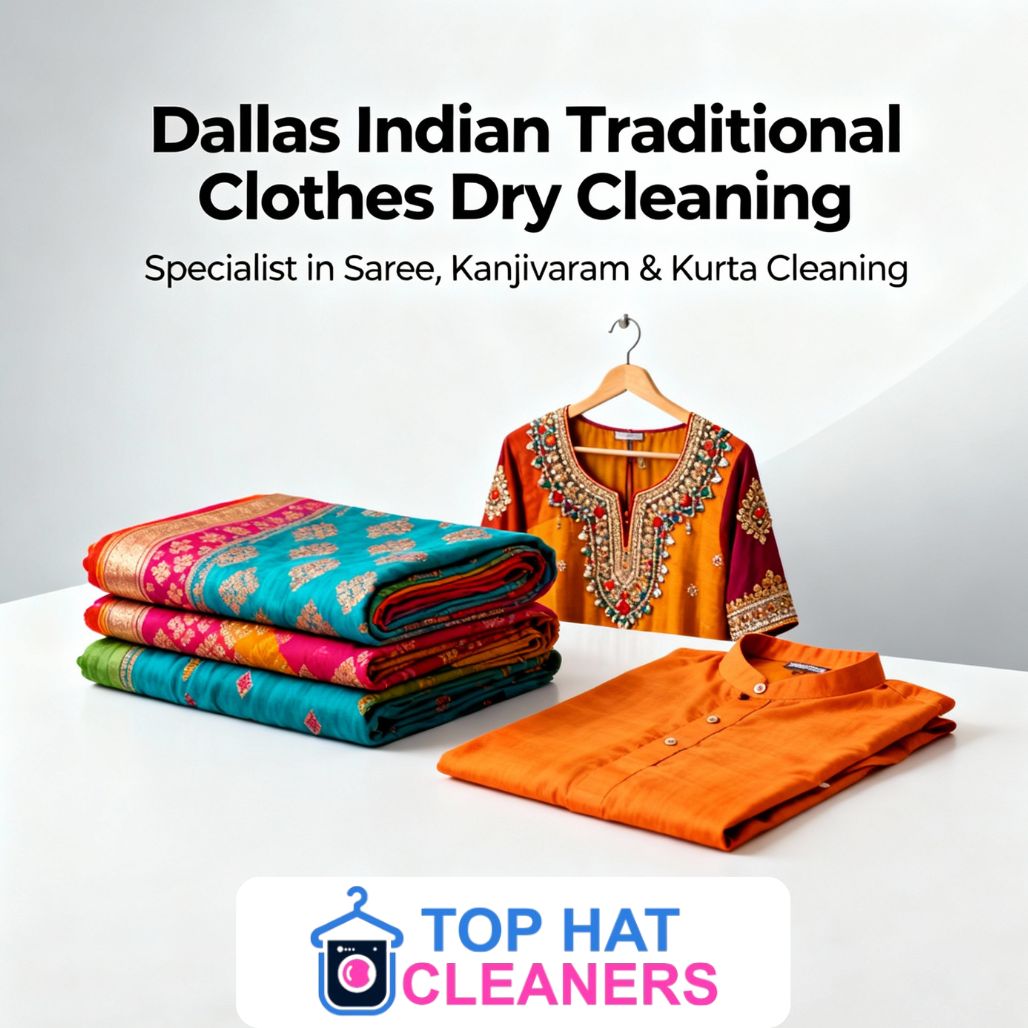
Specialized dry cleaning is essential for preserving the beauty and longevity of every Indian fabric, from everyday kurtas to magnificent Kanjivaram sarees. For Dallas residents, Top Hat Cleaners offers premier Dallas dry cleaning tailored specifically for intricate Indian garments, ensuring your traditional outfits are always celebration-ready and protected for generations.​

Why Specialized Dry Cleaning Is Crucial

Indian fabrics are not just pieces of clothing—they are works of art, representing centuries of culture through their textiles, dyeing, embroidery, and craftsmanship. A handloom cotton kurta, a delicate chiffon saree, or an opulent Kanjivaram saree may all look stunning, but each demands unique care.​

  • Traditional Indian attire uses fabrics like silk, georgette, organza, velvet, and brocade, which require discerning expertise to clean safely.​

  • Intricate details like zari, sequins, mirrors, or stonework can be irreversibly damaged in standard cleaning or washing machines; gentle, targeted dry cleaning preserves these embellishments.​

  • Color-rich dyes in Indian garments are prone to bleeding; professional dry cleaning in Dallas includes pre-treatment for colorfastness and uses methods that prevent colors from running or fading.​

silk fabric dry cleaning

Dallas Dry Cleaning for Sarees, Lehengas, and Kurtas

At Top Hat Cleaners, specialized Dallas dry cleaning guarantees expert handling of treasured Indian wear. Here’s how:

  • Silk sarees, especially luxury Kanjivaram, Banarasi, and chiffon types, are treated with gentle, eco-friendly solvents. This maintains texture and sheen without stripping away color or damaging zari work.​

  • Bridal lehengas are cleaned with hand-tailored techniques that honor heavy embroidery, mirrors, and beads, avoiding distortion and loss of embellishments.​

  • Kurtas—whether silk, brocade, or fine cotton—are cleaned to preserve their fit and finish, maintaining comfort and shape while removing odors and stubborn festive stains.​

Dallas dry cleaning experts like Top Hat Cleaners make fabric care easy with free pickup and delivery across the Dallas-Fort Worth region, ensuring both convenience and uncompromising quality.​

Fabric Challenges and Solutions

Each type of Indian fabric comes with specific cleaning requirements:

  • Silk: Needs gentle solvents and low-pressure steaming to prevent fiber breakage and color fading.​

  • Cotton: Can often be cleaned more rigorously, but requires careful stain management without harsh chemicals.​

  • Georgette/Chiffon: Lightweight materials require careful handling to avoid tears; professional dry cleaning in Dallas uses special low-agitation techniques.​

  • Velvet/Brocade: Plush or textured surfaces are cleaned with moisture-free solvents to avoid water stains and shrinkage, protecting their luxurious feel.​

  • Zari/Embellishments: Metallic or delicate threads and beads are always spot-treated or hand-cleaned to maintain luster and avoid snagging.​

Preservation Beyond Cleaning

Dallas dry cleaning by Top Hat Cleaners doesn’t stop at cleaning; it’s about long-term preservation.

  • Clothes are returned ready to wear or store, sometimes with acid-free tissue paper and expert folding to prevent creasing, tarnishing, or fabric weakening.​

  • Alterations and repairs are offered to ensure traditional outfits always fit perfectly, restoring both their function and elegance.​

  • Professional storage advice ensures heirloom sarees or wedding lehengas are protected from humidity, sunlight, and pests.​

Wedding Dress Cleaning

Benefits of Expert Dallas Dry Cleaning

  • Extends the life of heirloom garments, preserving memories for the next generation.​

  • Protects expensive investments in bridal and festive wear.

  • Respects the effort and art invested by Indian artisans, keeping fabrics vibrant and embroidery intact.​

  • Convenient services in Dallas, with door-to-door pickup and delivery, tailored for the South Asian community.​

Customer Testimonials

Dallas customers consistently praise Top Hat Cleaners for saving delicate Kanjivaram sarees, rescuing wedding lehengas from tough stains, and consistently providing excellent Dallas dry cleaning with a personal touch.​

When Should You Opt for Professional Dry Cleaning?

  • After wearing garments at weddings, festivals, and special occasions.

  • Before storing clothing for long seasons or passing to future generations.

  • To remove stains, makeup, sweat, or lingering perfumes before they set in.​

Trending FAQ on Indian Fabric Dry Cleaning in Dallas

How often should I get my sarees dry cleaned?
For rarely worn sarees, clean annually before storage. Frequently used sarees should be dry cleaned every few wears to maintain freshness and vibrancy.​

Can dry cleaning in Dallas stop dyes from running in embroidered sarees?
Yes! Professional Dallas dry cleaning includes colorfastness testing and methods proven to prevent color bleeding, preserving your outfit’s appearance.​

Is dry cleaning safe for antique or vintage Indian fabrics?
Absolutely. Expert techniques are much safer than home washing, reducing the risk of fiber or thread damage to vintage garments.​

Can Top Hat Cleaners handle last-minute or urgent cleaning requests?
Yes, especially during wedding or festival seasons, Top Hat Cleaners in Dallas offers priority dry cleaning with free pickup and delivery.​

What’s the best way to store cleaned sarees or lehengas?
Fold with acid-free tissue between layers or use padded hangers. Keep in a dry, shaded space to avoid moisture or sun damage.​

Who should I trust for Indian attire dry cleaning in Dallas?
Look for cleaners with demonstrated expertise in handling Indian textiles, like Top Hat Cleaners—specialists who understand embroidery, natural dyes, and fabric structure.​

cotton kurta cleaning

Why Choose Top Hat Cleaners for Dallas Dry Cleaning?

Top Hat Cleaners stands out for its deep commitment to preserving cultural heritage and ensuring every client’s garments retain their artistry and charm. The experienced staff inspects and customizes each cleaning for the fabric and its unique embellishments, with services that are budget-friendly and environmentally conscious.​

Their guarantee: Whether it’s a family heirloom Kanjivaram saree, a modern wedding lehenga, or an everyday silk kurta, your Indian apparel receives gentle care, timely service, and exceptional results—right here in Dallas.​

How India’s Climate and Local Wear Patterns Affect Fabric Care

Different regions in India have distinct climate conditions, and many of these influence how fabrics behave over time. Hot temperatures, high humidity, and sudden monsoon showers can make fabrics more prone to mold, odor, and color fading. Fabrics like cotton and linen may absorb moisture quickly, while silks and brocades can retain sweat salts that weaken fibers.

In the United States, especially in cities like Dallas or other metropolitan areas with dry heat, temperature swings between indoor air-conditioned spaces and outdoor heat also affect fabric fibers. Frequent exposure to sunlight can fade rich colors and reduce the brightness of zari work on traditional outfits. All these factors make professional care and specialized dry cleaning essential for maintaining fabric quality and longevity.

Understanding how climate interacts with fibers is part of why Indian fabrics require expert handling. Professional dry cleaners are trained to anticipate these conditions and offer treatments that remove deep-seated residue, protect dyes, and stabilize fabric strength.

The True Cost of Fabric Damage from Improper Cleaning

Many people underestimate how much damage ordinary washing or rough handling can cause to delicate fabrics. Washing machines can twist fibers in kurtas, stretch embroidery threads, and weaken the shine of elegant fabrics such as Kanjivaram silk.

Delicate fabrics like organza or chiffon can easily snag on machine agitators, while heavy embellishments can loosen beads or embroidery threads. Unsuitable detergents strip natural oils from silk and cotton threads, making fabric brittle over time.

The cost of repair or replacement far exceeds the investment in professional dry cleaning. Expert dry cleaners not only remove stains but also extend the life of garments, preserving the fabric’s natural strength and appearance.

Advanced Techniques Used in Specialized Dry Cleaning

Professional dry cleaners use a variety of advanced processes depending on the fabric and its current condition:

Customized Solvent Selection

Different solvents work best for specific fibers. For instance, delicate silks benefit from gentle, low-aggression solvents that protect natural sheen and fibers.

Controlled Temperature Cleaning

Temperature is carefully monitored to avoid fiber shrinkage in cotton or fiber distortion in synthetics and silks.

Stain Remediation Expertise

Trained professionals identify and treat stains individually. Oil-based stains, ink marks, makeup residue, and food stains are all assessed uniquely. Pre-treatment keeps stains from setting permanently.

Hand Finishing and Pressing

After solvent cleaning, garments are hand-finished to restore pleats, shape, and fall. This is particularly important for kurtas and long flowy fabrics like anarkalis.

Fabric Guide: How Each Indian Material Responds to Dry Cleaning

Understanding fabric behavior helps customers know why certain care methods matter.

Cotton and Linen

These natural fibers are breathable but prone to shrinkage and dye bleeding if washed incorrectly. Professional dry cleaning stabilizes the fabric without excessive stress.

Silk Varieties

Silk fabrics, such as tussar, mulberry, and Kanjivaram, have a natural sheen that can dull if aggressive chemicals or high heat are used. Dry cleaning preserves texture and color brilliance.

Chiffon and Georgette

Lightweight and delicate, these fabrics are prone to tearing. Handled by experts, they retain softness and translucence after cleaning.

Velvet and Brocade

Heavy textures with pile or raised designs can flatten or lose dimension when improperly washed. Dry cleaning maintains depth and richness.

Synthetic Blends

Fabrics blended with polyester, viscose, or nylon require chemical balancing to protect the synthetic fibers from pilling or coating changes. Specialized dry cleaning methods handle this well.

What to Communicate When You Bring Your Garments for Dry Cleaning

Effective communication between the customer and the dry cleaner ensures better results:

  • Mention if the garment has stains from food, makeup, or sweat

  • Identify any fragile embellishments or loose threads

  • State if the garment has sentimental value or needs urgent return

  • Point out areas that you feel need special attention

This helps the cleaner prioritize care and select the right cleaning process.

The Dry Cleaning Workflow: Step by Step

First-time customers often wonder what happens behind the scenes. Here’s a look at how specialized dry cleaning typically works:

  1. Initial Inspection – Garments are evaluated for fabric type, stains, and embellishment details.

  2. Stain Treatment – Specific pre-treatments are applied to tackle individual stains.

  3. Dry Cleaning Cycle – Garments are placed in a machine that uses specialized solvents instead of water.

  4. Drying and Extraction – Moisture is removed carefully to prevent shrinkage.

  5. Hand Pressing and Finishing – Garments are reshaped, pleated, and pressed by hand or controlled machines.

  6. Quality Check – Final inspection ensures the fabric, colors, and finish meet high standards.

Each step requires skill, especially for delicately embroidered kurtas, heavy silk sarees, or detailed sherwanis.

How Embellishments Are Safely Preserved

Embellishments like beads, sequins, zari work, and embroidery add glamour but also complicate cleaning. Loose embellishments can snag on fasteners or tear off during wash cycles. Specialized dry cleaning:

  • Protects delicate embroidery by gentle solvent action

  • Avoids mechanical friction that can loosen beads

  • Preserves metallic threads from tarnishing

This attention to detail separates professional services from home washing.

Pressing and Shaping: Not Just Ironing

Pressing in dry cleaning is a meticulous process. Unlike simple ironing, professional pressing:

  • Uses tailored heat settings for each fabric

  • Maintains creases in kurtas

  • Respects fabric weave and fall

  • Restores shape in pleated garments

This ensures garments are ready to wear right out of the cleaner’s hands.

Seasonal Care: Preparing Indian Fabrics for Storage

Seasonal care is crucial for garments you don’t plan to wear for months. Proper storage helps avoid:

  • Yellowing of delicate cotton and silk

  • Musty smells from fabric moisture

  • Fabric weakening due to improper folding

Professionals recommend breathable garment bags and refolding garments occasionally to prevent permanent creases.

Long-Term Value: Why Specialized Dry Cleaning Is Worth It

Indian fabrics are often works of art. Traditional weaving, hand embroidery, and aesthetic detailing represent hours of craftsmanship. When properly cared for, these garments can last decades.

Professional dry cleaning protects that craftsmanship by:

  • Removing deep-seated stains

  • Preserving original color and fabric strength

  • Preventing future damage from improper washing methods

This long-term protection is an investment in garment life and appearance.

What First-Time Customers Can Expect

For many customers, the first experience with specialized dry cleaning can be eye-opening. You may notice:

  • Improved fabric texture

  • Enhanced shine in silks

  • Smoother hand feel in cotton and linen

  • Better drape and flow in light fabrics

You will also likely notice professional pressing makes garments look newer and fresher than DIY methods ever could.

Simple Tips to Extend Garment Life Between Cleanings

Between professional visits, simple care helps maintain fabric quality:

  • Hang garments in breathable space

  • Avoid direct sunlight exposure for long periods

  • Use cedar or natural sachets for moth protection

  • Spot clean only when necessary using gentle cloth

These small habits help reduce the frequency of required cleaning while protecting fabric beauty.

Laundry Cost Calculator
Cost Breakdown: