

Preserving the timeless beauty of an Indian traditional wear takes more than a simple wash—it requires expertise, care, and cleaning techniques tailored to delicate fabrics. Whether you wear a silk Kanjeevaram, a heavily embroidered Banarasi, or a lightweight georgette saree, Top Hat Cleaners offers professional saree dry cleaning services that treat your treasured garments with the respect they deserve.
- At TopHatCleaner.com, we understand the cultural and sentimental value a saree holds.
- Our cleaning process is gentle, effective, and designed to protect your saree’s intricate details and vibrant colors.
Expert Saree Cleaning by Top Hat Cleaners
At Top Hat Cleaners, Indian traditional clothes dry cleaning isn’t just another service, it’s a specialized craft perfected by experts with years of experience. Our trained team handles a wide range of traditional Indian silk sarees. From high-end designer pieces to heirloom handloom fabrics, we use industry-leading dry cleaning technology and eco-friendly solvents to return your clothes spotless and fresh while preserving its texture and charm.
We begin by examining the fabric, embellishments, and any stains. Based on this analysis, our experts choose the most appropriate cleaning method. Our goal is to renew your fabric so it looks as graceful as the day you bought it – without shrinkage or discoloration.
Whether you wear Ghagra, Kurta pajama or Lehenga regularly or save them for special occasions, routine professional cleaning helps extend their lifespan while keeping them flawless.
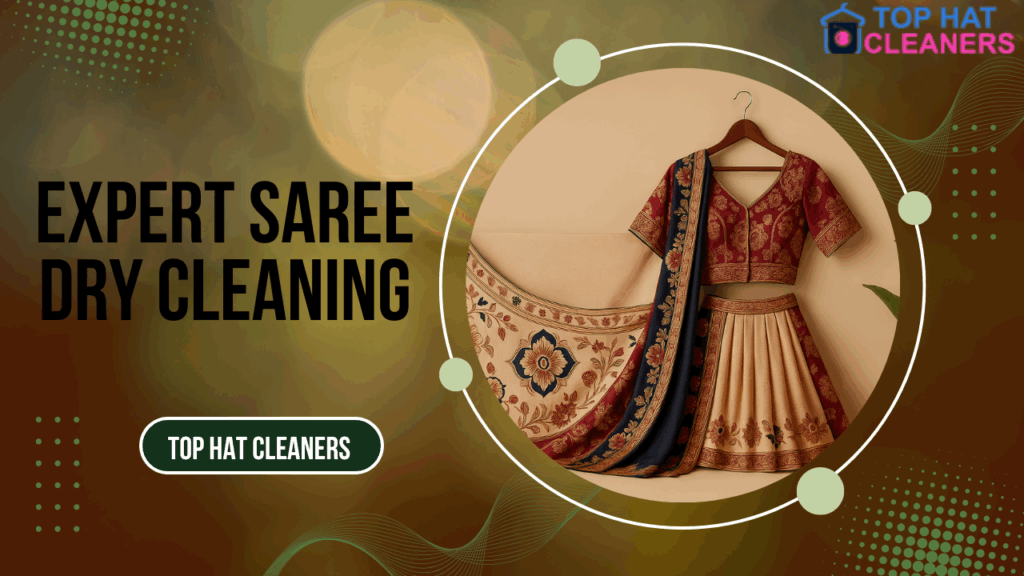
Specialized Sari Cleaning for All Fabrics
Not all fabrics are created equal and neither is our approach. We provide customized saree cleaning services for each type of fabric to ensure the best results.
Silk
We use pH-balanced, mild solvents to protect the luster and strength of silk sarees.
Cotton
Our dry cleaning keeps cotton sarees crisp and wrinkle-free while maintaining their softness.
Chiffon & Georgette
These delicate, lightweight fabrics require gentle handling to avoid stretching or fraying.
Linen
We preserve the structure and breathability of linen fabric after cleaning.
Net, Velvet & Brocade
Our experts clean richly textured sarees with extreme care to protect embroidery and fabric from fatigue or snags.
Thanks to our fabric-specific techniques, even heavily embellished and vintage sarees remain safe in our hands.
Gentle Stain Removal Without Damage
From oil spills and turmeric stains to makeup smudges and wine marks, Kanjivaram Sarees face a variety of tough blemishes. Before reaching for store-bought chemicals that can ruin the fabric, bring your saree to Top Hat Cleaners.
Our stain removal specialists examine the material and choose the safest treatment for the fabric type. Our process gently and effectively lifts stains while preserving the saree’s color and texture.
Life gets busy, and visiting the Laundry isn’t always convenient. That’s why we offer doorstep clothes cleaning pickup and delivery.
Book your service online at TopHatCleaner.com
Select a convenient pickup time
We collect, clean, and return your clothes fresh, folded, and ready to wear
Why Choose Top Hat Cleaners for Saree Dry Cleaning?
Experienced Professionals: Our technicians specialize in ethnic Indian wear
Advanced Techniques: We use dry cleaning, wet cleaning, and spot treatments based on fabric needs
Fabric-Safe Methods: No bleach or harsh chemicals—only customized care
Customer-Centric Service: Flexible timing, online booking, and responsive support
Trusted by Thousands: Our clients rely on us to keep their sarees in pristine condition
Understanding the Cultural Importance of Sarees
Sarees are more than garments; they are symbols of tradition, heritage, identity, and celebration. In many Indian families, sarees are passed down across generations — bridal silks, festive weaves, heirloom treasures, and gift pieces carry emotional resonance and long histories. Because they often represent personal stories and memorable moments, caring for them with expert dry cleaning is not just practical — it is respectful. Professional dry cleaning honors the craftsmanship behind each saree and protects these cultural icons for future wear.
Why Daily Washing Is Not Enough
Many people assume regular washing at home is sufficient, but home methods can only remove surface dirt. Sarees often trap:
Body oils and sweat
Perfume residues
Dust and pollen
Invisible pollutants from air
Skin lotions or makeup marks
These invisible residues embed deeply into fibers. Over time they weaken threads and cause color fading or fabric weakening. Professional dry cleaning goes beyond surface cleaning and preserves the integrity of these treasured garments.
How Different Fabrics React to Cleaning
Indian sarees come in many fabrics, each with unique properties and vulnerabilities.
Silk Sarees
Legendary for shine and strength, silk is sensitive to moisture and heat. Improper washing can dull the sheen and weaken the fabric.
Cotton Sarees
Breathable and comfortable, cotton fibers may shrink or lose vivid dyes when washed with harsh detergents or hot water.
Chiffon and Georgette
Lightweight and flowing, these fabrics snag easily and can stretch or tear with rough handling.
Designer Blends
Modern sarees often mix fibers with decorative details, requiring precision care to avoid distortion.
Net and Embellished Fabrics
Net sarees with beads, stones, sequins, or zari need gentle solvent cleaning to protect both fabric and decoration.
Understanding these differences helps cleaners choose ideal methods and ensures better final results.
What Happens During Professional Inspection
When you bring your saree for dry cleaning, professionals begin with a detailed inspection. This step is crucial and often overlooked by first-time users. During inspection:
The fabric type is identified
Color stability is assessed
Embroidery and embellishments are evaluated
Pre-existing weak spots are noted
Stains and blemishes are located and categorized
This initial review guides technicians in planning the safest, most effective cleaning approach.
Pre-Treatment for Stains — A Key Step
Stains come in many types: oil, food, makeup, perfume, sweat, or environmental elements. Each stain behaves differently and requires a unique strategy. Pre-treatment loosens deeply set particles so they can be lifted more effectively during the main cleaning cycle. Without pre-treatment, stubborn marks can set permanently — even after cleaning — especially on delicate fabrics.
Choosing the Right Cleaning Method
Based on inspection results, cleaners select a customized method that protects fabric integrity. Professional dry cleaning uses special solvents that:
Dissolve body oils
Lift invisible residues
Avoid fiber swelling
Maintain fabric strength
Preserve color richness
Specialized machines control temperature, motion, and solvent strength, ensuring gentle but effective cleaning.
How Embellishments Are Safely Delivered
Many Indian sarees include:
Zari work
Sequins
Beads
Thread embroidery
Metallic details
These additions make a saree special but also fragile. Professional technicians secure loose threads, isolate delicate sections, and handle them separately when necessary. This prevents damage or loss during the cleaning process.
Finishing: Not Just Ironing
After cleaning, sarees go through a finishing stage that restores drape, shine, and natural flow. Proper finishing may include:
Steam pressing for smooth texture
Hand finishing for pleats and borders
Gentle shaping of edges
Flaw inspection after pressing
This final step ensures the saree is ready to wear with elegance and confidence.
Fabric Protection and Longevity
Professional dry cleaning strengthens fibers and protects weaves from future damage. By removing hidden residues and avoiding harsh water or detergents, sarees look newer longer. This protection is especially important for sarees worn repeatedly for:
Weddings
Festivals
Cultural celebrations
Religious events
Family functions
Each of these occasions deserves a garment that looks vibrant and well-maintained.
Cost vs Value: Investing in Protection
Many first-time customers focus on price, but value shouldn’t be measured solely by cost. When you invest in professional dry cleaning:
You extend saree lifespan
You prevent color fading
You protect embroidery and zari
You reduce fabric weakening
You avoid costly repairs later
Think of professional care as preventive maintenance — preserving beauty before irreversible damage occurs.
How Seasonal Conditions Affect Sarees
Dallas and the surrounding regions experience weather shifts — hot summers, varied humidity, and cooler winters. These conditions influence fabric behavior:
Heat can intensify body oils
Humidity makes fabrics trap moisture and pollutants
Dry air can embrittle fibers over time
Professional dry cleaning mitigates these environmental stressors and restores ideal balance.
Common Misconceptions About Dry Cleaning
Many people believe dry cleaning means exposure to harsh chemicals or strong odors. Modern professional dry cleaning is different. It focuses on:
Gentle solvent action
pH-balanced processes
Environmentally mindful approaches
Odor-free results
Fabric-safe techniques
Understanding this helps customers feel comfortable with entrusting delicate or expensive sarees to professionals.
How Often Should Indian Sarees Be Dry Cleaned?
Frequency depends on use:
Wedding or festival sarees: after every major wear
Occasional wear sarees: once a season
Daily-use garments: every 2 to 3 wears
Storage pieces: at least once per year
Professional cleaners can advise based on fabric type and how often you wear each piece.
How to Prepare Sarees for Dry Cleaning
You can help ensure great results by:
Checking for noticeable stains before drop-off
Not spraying perfume directly on fabric
Avoiding pinning pleats too tightly
Removing heavy accessories before cleaning
Providing notes about spill sources
These small steps help cleaners focus on problem areas.
Storage Tips After Dry Cleaning
After professional care, proper storage preserves beauty and prevents future damage:
Use breathable covers
Avoid plastic wraps that trap moisture
Refold periodically to prevent permanent creases
Store away from direct sunlight
Keep pheromone deterrents for moth protection
Good storage habits extend the positive effects of dry cleaning.
Handling Heirloom and Vintage Sarees
Heirloom sarees deserve special attention because older fibers are more vulnerable. Vintage weaves, rare embroidery, or hand-woven textures need a cautious approach. Professional cleaners:
Avoid harsh movement
Use low-impact solvents
Take extra time for inspection
Provide gentle finishing methods
This protects both fabric and heritage detail.
Why First-Time Customers Should Ask Questions
First-time dry cleaning customers benefit from asking about:
Fabric specifics
Stain strategies
Turnaround time
Finishing techniques
Storage recommendations
Clear communication helps customers feel confident and understood.
How Professional Dry Cleaning Enhances Wear Comfort
Sarees that are professionally cleaned feel:
Softer against the skin
Free of hidden residues
Lighter in hand
Fresh and non-odorous
These improvements make wearing them more enjoyable.
Testimonials From Customers
Many customers report that after professional saree dry cleaning:
Colors stay bold longer
Embroidery looks brighter
Fabric feels renewed
Odors are eliminated
Drape and pleats look smoother
These results enhance confidence and encourage repeat care.
What to Expect on Your First Visit
If it’s your first time entrusting a saree for dry cleaning, you can expect:
A garment assessment
Discussion of areas of concern
An explanation of care plan
Estimated turnaround time
Friendly guidance on storage and aftercare
This transparent process builds trust.
Common Mistakes to Avoid
Avoid these common errors that undermine saree care:
Washing silk at home
Using bleach on colored fabrics
Forgetting to remove heavy jewelry
Exposing wet sarees to sunlight
Ignoring small stains that later set
Correct care from the start prevents irreversible issues.
How Saree Dry Cleaning Supports Sustainable Wardrobes
Professional cleaning extends garment life, reducing textile waste and encouraging longer use. By preserving high-quality sarees, you avoid frequent replacements, which supports sustainability and mindful consumption.
Comparing Dry Cleaning With Home Methods
Home washing can:
Fade color
Stretch delicate fabric
Weaken fibers
Distort embroidery
Professional dry cleaning avoids these problems and protects investment pieces.
Final Thoughts on Indian Saree Dry Cleaning
Sarees carry stories, celebrations, and memories, which deserve to be preserved with the utmost care. Professional dry cleaning restores beauty, protects fabric nuances, and ensures every wear feels memorable. Whether it’s a silk wedding saree, a casual cotton drape, or an embellished celebratory outfit, expert care helps your garments remain cherished — season after season — year after year.
Book Your Laundry Cleaning Today
Your saree isn’t just clothing, it’s a story woven in fabric, color, and memory. Don’t trust its care to just anyone. Let Top Hat Cleaners protect and refresh it with expert cleaning.
Visit TopHatCleaner.com today to book your first pickup or explore our full range of garment care services.
