
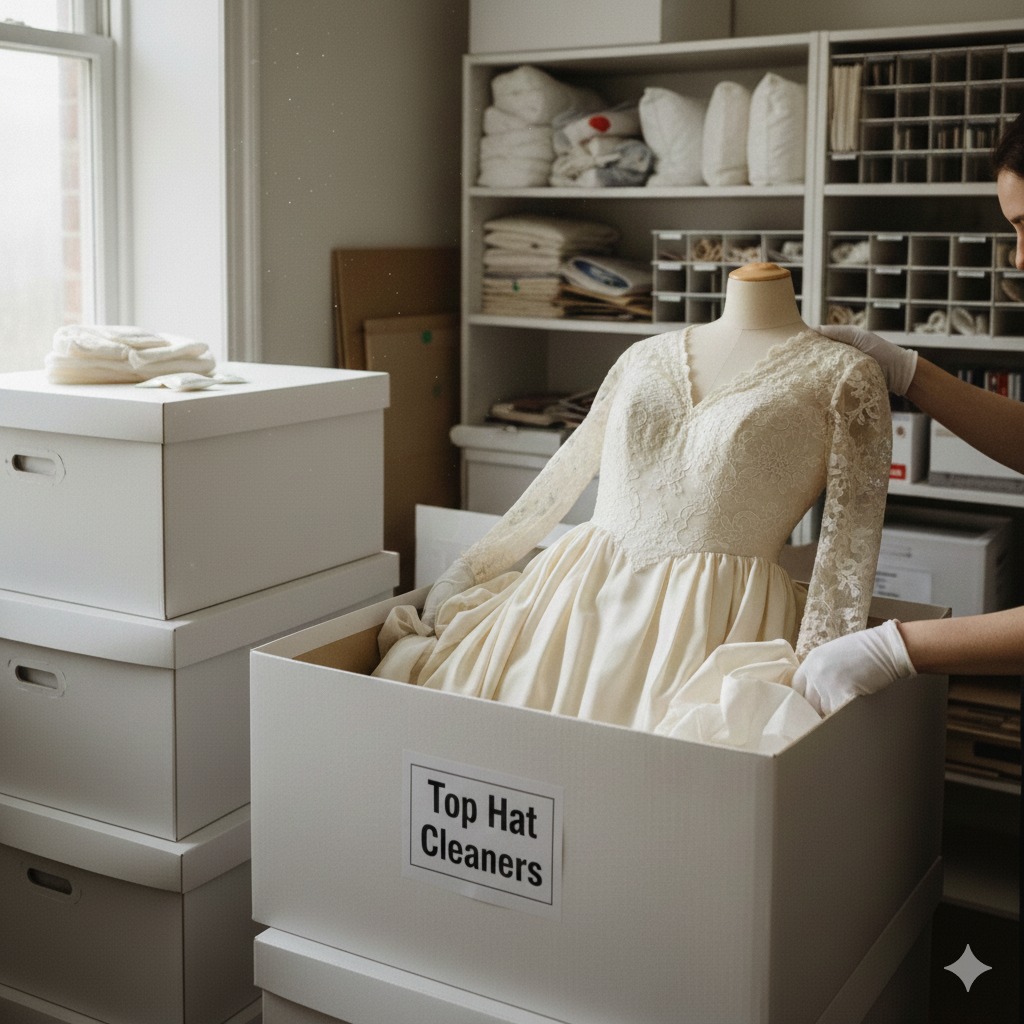
Introduction: The Enduring Legacy of Your Wedding Gown
Your wedding day is a blur of joy, emotion, and unforgettable memories. Indeed, the dress stands at the center of it all—a garment representing a once-in-a-lifetime moment. For many brides, the gown is more than just an outfit; it’s an heirloom, woven with the promise of the future. Whether you plan to pass it down to a future generation, use a piece of its lace for a christening outfit, or simply want to revisit its magic years from now, protecting its longevity requires specific, meticulous care. Hanging it in the closet is not enough. Instead, it requires a detailed, long-term wedding dress preservation plan.
In a vibrant city like Dallas, climate fluctuations can significantly degrade textiles. Therefore, knowing the exact steps to take after professional cleaning is critical. This comprehensive guide will walk you through the essential, expert-approved methods for safely storing your cherished gown at home for decades. We ensure your gown remains as brilliant and beautiful as the day you said, “I do.” Protecting this investment is a commitment, and with the right approach, your gown will easily stand the test of time.
The Critical First Step: Why Professional Wedding Gown Cleaning is Non-Negotiable
Before you consider long-term storage, your wedding dress must undergo professional cleaning and preservation. This step is the single most important factor guaranteeing the gown’s survival. Ultimately, without it, all subsequent storage efforts will be futile.
The Invisible Threats: Stains You Cannot See
The biggest threat to a stored wedding dress is not dust or light, but the stains initially invisible to the eye. Champagne spills, white wine droplets, cake frosting, or even perspiration may seem minor or completely undetectable after the wedding day. However, these organic stains contain sugars and acidic compounds. They oxidize over time. Within a few months or a year, they caramelize and turn into dark, permanent, yellow or brown spots that become significantly harder—or impossible—to remove. Consequently, immediate, professional wedding gown cleaning is paramount.
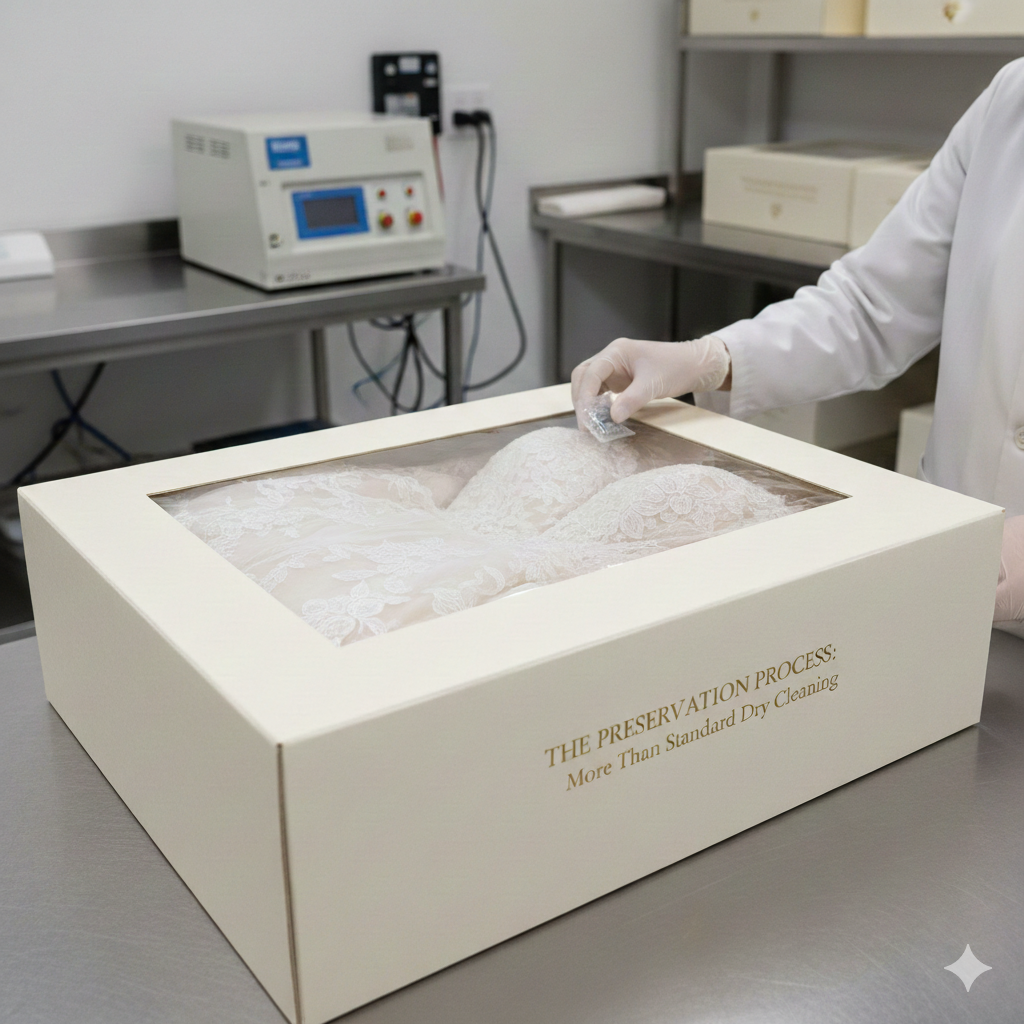
The Preservation Process: More Than Standard Dry Cleaning
Professional dress preservation goes far beyond standard dry cleaning. Reputable cleaners specializing in bridal wear use specialized solvents and meticulous techniques. These methods are designed to be gentle on delicate fabrics like silk, lace, and tulle, yet aggressively target stains.
Inspection and Spot Treatment: A technician carefully inspects every inch of the dress under high light. They identify stains, loose beads, or tears. They perform specific, highly targeted stain removal before the general cleaning process.
The Cleaning Method: Most modern wedding dresses receive treatment using a purified solvent-based system (often hydrocarbon) or a specialized wet-cleaning method for natural fibers. Crucially, the process ensures no residues remain that could attract insects or weaken the fibers.
Archival Packaging: Once clean, the gown is packaged in archival-quality materials, typically acid-free tissue and a box. This creates a buffered, safe environment.
Attempting a DIY cleaning is the quickest way to ruin the fabric or permanently set a stain. Therefore, for residents in the Dallas area, choose a cleaner with a proven track record in delicate textile care, like Top Hat Cleaners. This ensures experts handle the foundation of your long-term preservation correctly from the very start.
Crafting the Perfect Microclimate: Ideal Storage Conditions
Once your wedding dress preservation specialist returns your gown, the long-term success of its storage depends entirely on the environment you choose within your home. The goal is simple: create a cool, dry, dark, and stable microclimate.
The Dallas Climate Challenge: Temperature and Humidity
The biggest challenge in a city like Dallas, Texas, involves managing temperature and humidity swings. This heat permanently weakens fabric fibers and accelerates yellowing. Basements are cooler, yet they often suffer from high humidity and are susceptible to flooding, mildew, and mold.
Optimal Environment: The Rule of Stability
Follow this rule of thumb: Store your preserved gown in a location that maintains stable temperature and humidity levels. Ideally, this mirrors the conditions inside your main living area. These conditions inhibit the growth of mold and mildew while slowing the chemical degradation of the fabric.
Where Not to Store Your Gown
To achieve decades-long dress preservation, you must eliminate high-risk locations:
Attics: They are too hot, experience high temperature fluctuation, and are prone to rodent and insect activity.
Basements/Crawl Spaces: These areas are too damp, too humid, and carry a high risk of mold/mildew spores and flooding.
Garages/Sheds: They are typically uninsulated, exposed to vehicle exhaust fumes (which can yellow fabric), and prone to extreme temperature swings.
Exterior Wall Closets: These closets can be slightly cooler or warmer than the interior of your home. They are more susceptible to moisture build-up during cold spells.
The Best Location: The Interior Closet
The safest place for your archival box is a storage area that is part of your home’s central air conditioning and heating system. This is typically a closet located on an interior wall, away from vents, windows, or heating units. Consequently, a closet on the main floor or a temperature-controlled spare room is often the ideal spot for decades of successful wedding dress preservation. Always place the archival box on a high shelf within the closet, far from the floor, where minor leaks or spills could occur. Furthermore, ensure the storage location is far from mothballs, cleaning supplies, paint, or any other chemicals that could release fumes, as fumes can interact with the fabric and cause permanent discoloration.
Essential Storage Materials: Archival Quality for Dress Preservation
The materials surrounding your gown are just as vital as the environment. You must use only archival-quality, acid-free, and lignin-free products. This barrier protects your gown from harmful chemicals present in everyday paper and cardboard.
Why Acid-Free Materials are Critical
Common cardboard boxes and tissue paper contain acid (lignin). This acid will leach into the fabric over time, a process known as “acid migration.” Ultimately, this results in permanent yellowing and degradation of the fibers. True, long-term dress preservation requires materials that are chemically stable.
Choosing the Archival Box and Tissue
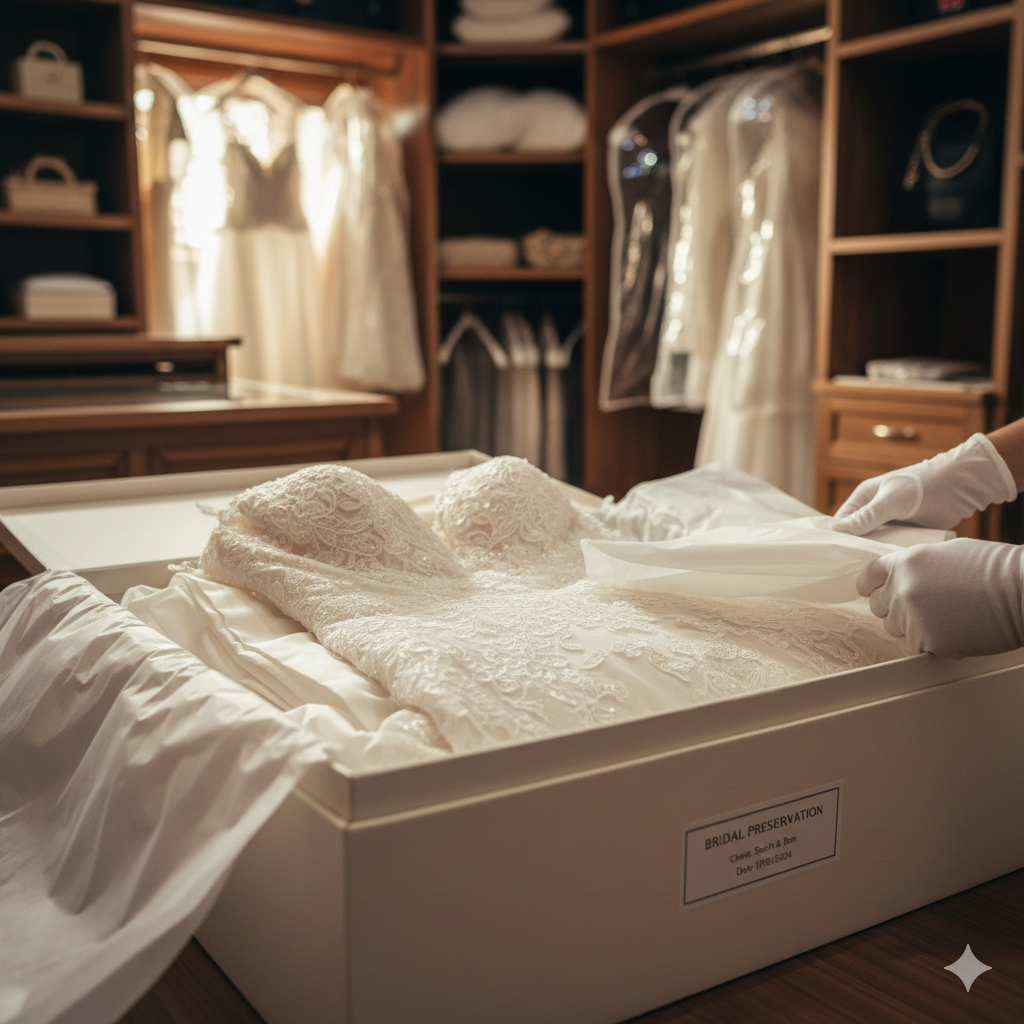
The box must be made of archival-quality, acid-free board. These boxes are designed to be sturdy, breathable, and chemically inert. If your professional cleaner did not provide one, purchase a specialized bridal storage chest.
In addition, use copious amounts of plain, white, acid-free (pH neutral or slightly buffered) tissue paper. You use this for stuffing and lining. Never use colored tissue, newspaper, or regular tissue from a craft store. This high-quality paper acts as a buffer against environmental changes.
The Danger of Plastic and Vacuum Sealing
It is a widespread myth that vacuum-sealing or storing a gown in plastic offers effective wedding dress preservation. In reality, plastic is an enemy of long-term storage:
Trapped Moisture: Plastic bags (including dry cleaner bags) trap residual moisture. They create a perfect micro-environment for mold and mildew growth.
Chemical Degradation: Many plastics (especially PVC) emit chemical fumes over time. These fumes cause severe yellowing of white or ivory fabrics.
Lack of Breathability: Natural fibers must breathe. Vacuum-sealing removes the air, but the extreme compression can cause permanent creases and damage to intricate details like beading, sequins, and lace appliqué. If you plan to store your gown for decades, avoid plastic entirely.
Muslin Bags and Handling Accessories
Some brides opt for an acid-free muslin garment bag. Muslin is 100% cotton, unbleached, and breathable. It allows air circulation while keeping dust and insects away. Crucially, avoid hanging a heavy, embellished gown long-term, even in a muslin bag, as the weight can stress and tear the shoulder seams.
If you plan to store your veil, shoes, or any other accessories with your gown, you must clean them separately. Store them in their own separate layer or section of the box, separated from the gown by acid-free tissue. Finally, be aware that certain metals on accessories (like shoe buckles or tiaras) can tarnish and stain the delicate fabrics if you place them in direct contact. Proper wedding gown cleaning extends to every accessory you plan to keep with the dress.
The Art of Packing: Safely Settling Your Gown for Decades
Packing the gown is the final, hands-on step of dress preservation you will manage at home. Proper technique is necessary to prevent permanent creasing and structural damage.
Preparation and Folding Technique
Always wash your hands thoroughly before handling the gown, or wear clean, lint-free cotton gloves. Even clean hands have natural oils. These oils can transfer to the fabric and degrade it over time.
Tissue Layer: Line the bottom of the archival box with a thick layer of acid-free tissue paper.
Strategic Folding: You should fold the gown as few times as possible to minimize sharp, permanent creases. Instead of folding across the full width, try rolling larger sections.
Support and Cushioning: Gently stuff the bust area with tissue paper to maintain its shape and prevent the fabric from collapsing on itself. Stuff long sleeves with tissue paper. Lay straps and sleeves flat along the body of the gown. Layer tissue paper between each fold of the skirt fabric. If the skirt is very full, you may fold it in a fan-like manner. The key is to pad every crease and fold.
Top Layer: Cover the entire folded gown with a final, generous layer of tissue paper before closing the lid.
The aim is to keep the gown supported and cushioned on all sides by the buffered tissue. This ensures that no fabric rests directly against another or the box for long-term storage.
Handling Embellishments and Inspection
Beading, sequins, and crystals are particularly susceptible to damage from compression. Ensure the tissue paper provides support under and around the beaded sections. This prevents the weight of the gown from crushing the embellishments against the fabric below.
Even the most perfect wedding dress preservation requires a small amount of maintenance. Every one to two years, gently open the box and inspect the gown. Look for any signs of yellowing, mold, or pest activity. If possible, gently refold the gown along different lines. This action redistributes the weight and prevents permanent, set-in creasing that occurs when the fabric rests on the same folds for decades. However, the inspection should be quick, and the gown should be returned to the box immediately. Minimal exposure to air and light is key.
FAQ: Your Dress Preservation Concerns and How Top Hat Cleaners Can Help.
Even with the best at-home care, brides often have questions about the initial preservation and long-term maintenance. Here are common concerns faced by Dallas-area brides and how a professional service helps.
My dress has a stubborn stain (red wine, mud) that I can’t see but know is there. Will it ruin my storage efforts?
Yes, invisible stains are the greatest long-term threat. They oxidize and turn brown over time, which makes later removal extremely difficult. Therefore, immediate, professional wedding gown cleaning is crucial. Top Hat Cleaners utilizes advanced stain removal technologies to safely lift invisible or set-in organic stains that DIY methods cannot touch. We conduct a thorough pre-treatment inspection to ensure every contaminant is neutralized before storage. This forms the essential foundation for successful dress preservation.
I heard that delicate fabrics like silk or chiffon might yellow over time regardless of cleaning. Is that true?
While natural aging occurs, professional wedding dress preservation significantly slows this process. Top Hat Cleaners helps by ensuring the initial cleaning removes all chemical and organic residues (like perspiration and sugar) that accelerate yellowing. Furthermore, we only use pH-neutral, archival tissue paper and boxes. These are specifically designed to buffer the fabric against natural acidic degradation, guaranteeing a stable environment for decades.
My gown is heavily beaded and has delicate lace. I’m afraid of damage during the initial cleaning process.
This is a completely valid concern. Our specialists are highly trained in handling delicate fabrics and elaborate embellishments. We determine the safest wedding gown cleaning method (whether specialized dry cleaning or controlled wet-cleaning) based on the specific fabric composition and decoration. We treat each gown individually to ensure the structural integrity of every bead, lace appliqué, and thread is maintained for long-term dress preservation.
What should I do if I open my box for inspection and find mold or mildew?
If you detect mold, do not attempt to clean it yourself or put the dress back in the closet. Bring the gown to Top Hat Cleaners in Dallas immediately. Mold spores can spread quickly and cause irreversible damage. We have professional treatments designed to halt the mold growth and safely remove the spores from the fabric before permanent staining or fiber weakening occurs. Thus, we save your crucial wedding dress preservation efforts.
I need archival supplies for my other sentimental items, like my veil, shoes, and garter. Can Top Hat Cleaners help?
We focus on making the entire preservation process seamless. If you need supplies for items not included with the main gown, we can advise on or source professional, acid-free storage boxes and tissue paper. This ensures that the entire contents of your preservation package—from your gown to your veil—meet museum-quality archival standards for decades of safe keeping, maximizing your long-term dress preservation success.
Conclusion: A Legacy Worth Preserving
Your wedding gown is a tangible memory of a joyous day. With a proactive, professional approach, you can ensure its beauty is enjoyed for generations. The key to successful, decades-long storage lies in two non-negotiable steps:
Immediate Professional Cleaning: An expert ensures every stain and residue is neutralized through thorough wedding gown cleaning.
Proper Archival Storage: You must maintain a stable, cool, and dry environment using only acid-free materials for the duration of the storage period.
For brides in Dallas seeking the absolute highest standard for the beginning of this journey, trust your gown to experts who understand textile chemistry and archival quality. Contact Top Hat Cleaners today—because your cherished memories deserve the finest care for a legacy that will last.
