Leather is a classic fabric that is frequently used for jackets, bags, shoes, and other accessories. To sustain the quality and longevity of leather products, it is essential to clean them regularly. However, many people need clarification on whether leather dry cleaning services are the same as regular dry cleaning services. In this blog post, we’ll explore the similarities and differences between the two and why it’s crucial to choose a specialized leather cleaning service.

What is the meaning of Dry Cleaning?

Dry cleaning is a simplified process that utilizes chemical solvents to remove dirt, stains, and odors from clothes and fabrics. It is different from traditional washing methods in that it doesn’t use water. Instead, the clothes are dipped in a solvent and then dried. Dry cleaning is the most result-oriented manner for cleaning delicate fabrics that can’t withstand the rough and tumble of a washing machine.

Leather Dry Cleaning Service vs. Regular Dry Cleaning Services

While leather dry cleaning services and regular dry cleaning services share some similarities, they are not the same. Here are some key differences:

  1. The Cleaning Process

The leather cleaning process is different from regular dry cleaning. Leather cannot be cleaned in a regular dry cleaning machine, which uses water and detergent. Instead, a specialized leather dry cleaning service uses a gentle solvent-based cleaner that is formulated specifically for leather. The cleaner is applied by hand, and the leather is then wiped clean.

  1. The Equipment

Regular dry cleaning services use specialized machines that are designed to wash and dry clothes without water. Leather dry cleaning services use specialized tools and equipment designed to clean and protect leather. This includes specialized leather brushes, sponges, and conditioners.

  1. The Expertise

Leather dry cleaning requires specialized knowledge and expertise. Not all dry cleaning services are equipped to handle leather cleaning. Leather cleaning services have a team of experts who are trained to clean and maintain leather products, ensuring that they are needed in optimal condition.

Why Choose a Specialized Leather Cleaning Service?

Leather is a delicate fabric that requires specialized care to maintain its quality and longevity. A specialized leather cleaning service has the knowledge, expertise, and equipment needed to clean and maintain leather products effectively. Here are some reasons why you should choose a specialized leather cleaning service:

  1. Proper Cleaning Methods

A specialized leather cleaning service has the knowledge and expertise to properly clean leather products. They use specialized cleaning methods designed to clean leather without damaging it.

  1. Protection from Damage

Leather products are delicate and can be easily damaged. Specialized leather cleaning services use gentle cleaning methods that protect the leather from damage.

  1. Quality Cleaning

Leather cleaning services use specialized equipment and cleaning products designed to effectively clean leather. This ensures that your leather products are cleaned thoroughly and look their best.

  1. Longevity

Leather products are an investment, and you want to ensure that they last as long as possible. Regular cleaning and maintenance by a specialized leather cleaning service can help to extend the life of your leather products.

In conclusion, leather dry cleaning service is not the same as regular dry cleaning services. Leather products require specialized care and cleaning methods to maintain their quality and longevity. Choosing a specialized leather cleaning service like Top Hat Cleaners ensures that your leather products are adequately cleaned and protected from damage. If you’re looking for a reliable and affordable leather cleaning service in Dallas, TX, then Top Hat Cleaners is the right choice for you. Contact us today to schedule your leather cleaning services and experience the Top Hat Cleaners difference.

Understanding Leather as a Unique Fabric

Leather is fundamentally different from textiles like cotton, polyester, silk, or wool. While woven fabrics are made of threads and fibers that respond predictably to solvents, water, and heat, leather is a natural material composed of animal hide that has been treated, dyed, and finished. Its structure is porous, sensitive to moisture, and highly reactive to changes in temperature and chemicals.

This unique composition means leather cannot be treated like ordinary garments. Regular dry cleaning solvents, temperature exposure, mechanical agitation, and generic press techniques that work for standard clothing can damage leather’s natural oils, cause discoloration, shrink the hide, or create cracks and stiffness. Proper care for leather requires specialized knowledge and processes designed specifically for its structure.

Why Leather Requires Specialized Cleaning

Leather garments and accessories — such as jackets, pants, skirts, gloves, bags, and even some shoes — accumulate surface dirt, body oils, pollutants, and odor over time. While these issues may look similar to stains on fabric, the way leather reacts to cleaners is entirely different.

Leather is sensitive to:

Water — which can cause drying, stiffening, and distortion
Heat — which can break down natural oils
Solvents — which may strip dyes or finishes
Abrasion — which can scratch or weaken the surface

Because of these sensitivities, effective cleaning requires a process that protects the hide’s structure while removing contaminants.

Regular Dry Cleaning vs. Leather Dry Cleaning

Regular Dry Cleaning
Standard dry cleaning is designed for woven fabrics. It uses controlled solvents to dissolve oils and dirt without water exposure. Garments are tumbled, rinsed in solvent, and dried under regulated conditions. While this works for shirts, suits, dresses, and many types of clothing, the process is not suitable for leather because:

Tumbling can distort shape
Solvents may strip protective finishes
Heat and pressure can dry out the hide
Moisture imbalance leads to stiffness

Leather Dry Cleaning
Leather dry cleaning is a specialized process tailored to the unique needs of leather hide. It involves:

Assessment of the leather type
Identification of finish (aniline, semi-aniline, pigment)
Targeted cleaning agents that respect natural oils
Hand-applied cleaning rather than machine tumbling
Moisture control to prevent drying or cracking

In many cases, leather cleaning combines gentle solvent cleaning with hand work and conditioning treatments that restore suppleness after cleaning. This is why leather dry cleaning is fundamentally different from regular dry cleaning — it is not a one-size-fits-all method.

How Leather Is Cleaned Professionally

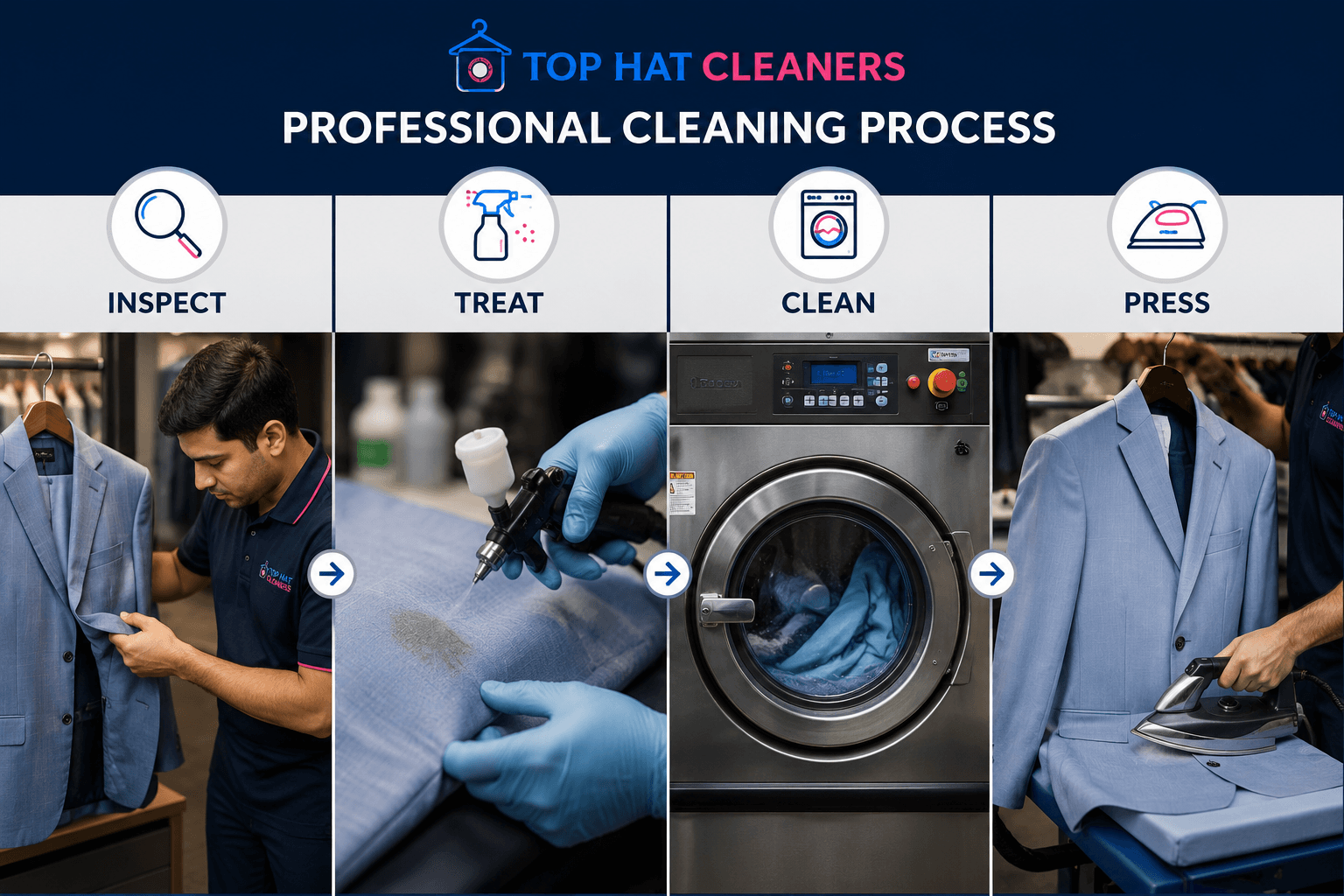
The professional cleaning process for leather typically includes multiple steps designed to ensure both cleanliness and preservation:

Inspection — Experts first identify the hide type, finish, and condition.
Surface Dirt Removal — Dust and light particles are gently brushed or vacuumed.
Targeted Cleaning — Specialized leather cleaning solutions are applied carefully, protecting dyes and finishes while dissolving embedded oils and residues.
Rinse and Extraction — The cleaning solution is removed without saturating the hide.
Conditioning — Natural oils are restored to prevent stiffness or cracking.
Finishing — Surface finishes are smoothed, color touch-ups may be applied if necessary, and the leather is inspected for final integrity.

This kind of tailored care ensures the leather remains as supple and vibrant as possible after cleaning.

When Regular Dry Cleaning Can Be Harmful

Submitting leather to regular dry cleaning can cause a range of issues:

Color fading or bleeding
Surface cracking
Dry, brittle texture
Warped or misshapen garments
Loss of finish or sheen

These problems occur because the regular dry cleaning process is not designed to manage the moisture balance, solvent compatibility, and structural needs that leather requires.

Signs Your Leather Needs Professional Care

Leather garments may need professional cleaning when you notice:

Persistent odors
Dark or greasy stains
Uneven surface sheen
Hard, stiff texture
Loss of natural luster
Visible residue buildup

Addressing these signs early with professional leather care prevents long-term damage and extends the lifespan of the item.

Daily Care vs. Professional Cleaning

There are simple steps you can take at home to maintain leather between professional cleanings:

Wipe with a soft, dry cloth to remove dust
Store away from direct sunlight
Use padded hangers to maintain shape
Avoid water exposure and heat sources

However, these routine steps are not a substitute for professional cleaning when stains, odors, or buildup occur. Professional care delves deeper than surface maintenance.

Why Conditioning Matters

Leather, unlike woven fabrics, contains natural oils that keep it soft and flexible. Over time, these oils evaporate or break down through use and exposure. Professional leather cleaning includes conditioning — a process of replenishing these natural oils to prevent dryness and cracking.

Conditioning restores suppleness, revitalizes texture, and protects against long-term wear.

Handling Different Types of Leather

Different leather finishes behave differently under stress. For example:

Aniline leather is soft and dye-rich but more sensitive to staining.
Semi-aniline leather has protective coatings but still requires gentle care.
Pigmented leather has surface coatings that may tolerate milder cleaning better.
Suede and nubuck have textured surfaces that need specialized brushing and solvent techniques.

Professional cleaners understand these differences and adapt methods accordingly — something regular dry cleaning cannot do.

Additional Services for Leather Items

Beyond cleaning, professional leather care may include:

Stain protection treatments
Color restoration
Minor repair and edge refinishing
Re-oiling and conditioning
Odor neutralization

These value-added services improve the look and longevity of leather items.

Cost Considerations

Professional leather cleaning typically costs more than regular dry cleaning because of the increased care, specialized training, and manual effort involved. However, this investment protects the garment and prevents costly damage that can result from improper cleaning.

Long-term savings come from prolonged garment life and preserved appearance.

The Importance of Expert Assessment

One of the most valuable aspects of professional leather care is expert assessment. A trained technician evaluates:

Type of leather
Age and wear level
Existing damage
Appropriate cleaning approach

This initial assessment prevents guesswork and ensures the right process is applied — a step that generic cleaning overlooks.

Storage After Cleaning

Proper storage after professional cleaning is also essential. Leather should be stored in a breathable environment, away from direct sunlight and extreme temperature changes. Avoid plastic covers that trap moisture and cause mold or stiffness.

Instead, use breathable slips or garment bags designed for leather.

Everyday Leather Care Tips

Between professional cleanings, adopt simple habits:

Brush off dust regularly
Use leather-safe protectors before use
Keep leather dry and away from moisture
Air out after wearing to prevent odor buildup
Avoid heavy perfumes or sprays directly on the hide

These habits extend the time between professional cleaning needs.

Conclusion

Leather dry cleaning is not the same as regular dry cleaning. The differences are rooted in the fundamental nature of leather: its sensitivity to moisture, heat, solvents, and structural stress. While regular dry cleaning works well for woven fabrics, leather requires a tailored approach that protects natural oils, preserves texture, and maintains color and shape.

Professional leather cleaning combines expert assessment, specialized solutions, targeted techniques, and conditioning treatments that regular dry cleaning simply cannot replicate. Investing in the right care ensures your leather garments and accessories stay beautiful, supple, and long-lasting — preserving not just fabric, but value and confidence in every wear.


Laundry Cost Calculator
Cost Breakdown: